Delivering science-led environmental solutions that balance development, sustainability, and regulatory compliance. Our expertise supports informed decision-making through rigorous assessment, strategic planning, and evidence-based environmental management.
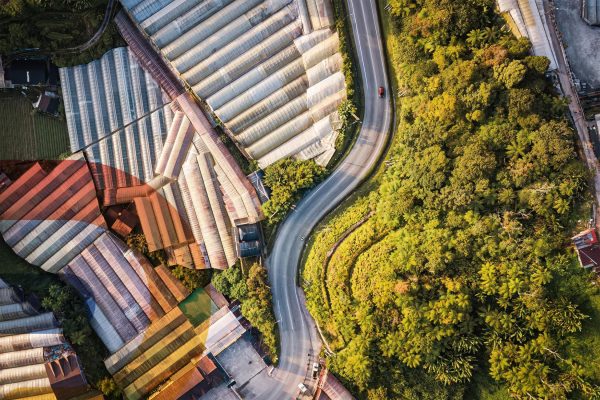
Our Science & Environment services provide comprehensive, evidence-based assessments to support sustainable development and informed decision-making. By integrating scientific analysis, regulatory insight, and multidisciplinary expertise, we help clients manage environmental risks, meet compliance requirements, and deliver projects responsibly across diverse environmental contexts.
Explore our range of environmental consulting services, designed to provide insight, guidance, and practical solutions for complex challenges. Each offering reflects our commitment to scientific rigor, sustainable development, and delivering real-world impact.
Comprehensive evaluation of potential environmental impacts to support informed planning, regulatory approval, and sustainable project implementation.
Structured frameworks to manage, monitor, and mitigate environmental risks throughout project development and operation.
Ongoing data-driven monitoring to ensure compliance, track environmental performance, and support adaptive management strategies.
Early-stage assessments to evaluate environmental constraints, risks, and opportunities, supporting sound investment and development decisions.
Scientific modelling and analysis to predict, assess, and manage noise and vibration impacts on communities and sensitive environments.
measures and maps underwater areas such as seas and rivers.It provides depth and seabed data for safe navigation and marine development.
The process of studying soil and ground conditions before construction.
It determines soil strength, stability, and suitability to ensure safe foundation and structural design.
The study of coastal areas to identify mineral resources and geological conditions.It evaluates shoreline composition, erosion patterns, and ground characteristics to support sustainable coastal development and resource management.
To evaluates the safety risks of vessel movement in a specific water area.
It analyses traffic patterns, collision risks, and navigational hazards to ensure safe and efficient maritime operations.
Analyses water movement in coastal and marine areas, including waves, tides, and currents.It uses simulations to predict water behaviour and support safe coastal and offshore development.
Examines river flow, rainfall impact, and flood patterns.It helps predict water levels and manage flood risks for sustainable river and land planning.
Evaluates the condition and safety of underground water sources.
It analyses contamination levels and uses modelling to predict water quality changes for safe water management and environmental protection.
Measures and evaluates greenhouse gas emissions from activities, projects, or organisations.It helps identify emission sources and supports strategies to reduce carbon footprint and improve environmental sustainability.
The process of creating a structured plan to reduce greenhouse gas emissions using scientific data and climate targets.
It aligns organisational or project strategies with global climate goals to achieve measurable and sustainable carbon reduction.
Predicts and analyses the condition of water in rivers, lakes, and coastal areas.It uses data simulations to assess pollution levels and support effective water management and environmental protection.
Is an initial assessment conducted to identify potential environmental impacts of a proposed project.It helps determine environmental risks and whether a detailed environmental study is required.
Evaluates air pollution levels and identifies potential emission sources.
It uses data and simulations to predict air quality impacts and support environmental management and regulatory compliance.
Is an initial assessment conducted to identify potential environmental impacts of a proposed project.It helps determine environmental risks and whether a detailed environmental study is required.
Evaluates the potential effects of a project, policy, or development on public health.It identifies health risks and provides recommendations to protect and improve community wellbeing.
Is an initial assessment conducted to identify potential environmental impacts of a proposed project.It helps determine environmental risks and whether a detailed environmental study is required.
Measures to prevent soil erosion and control sediment runoff during construction or land disturbance.It helps protect water quality, reduce environmental impact, and ensure compliance with environmental regulations.
Study conducted to identify potential environmental contamination or risks at a specific site.It evaluates soil, groundwater, and site history to ensure the land is safe for development or transaction purposes.
evaluates potential risks based on their likelihood and impact using descriptive analysis rather than numerical data.It helps identify priority risks and guide decision-making for safety and project management.
Evaluates the impact of pressure waves generated by explosions on structures and surrounding areas.
It helps assess potential damage and ensure safety measures are designed to protect people and infrastructure.
Evaluates the potential environmental and health impacts of releasing treated or untreated wastewater into water bodies.It assesses pollution levels, exposure risks, and compliance with regulations to ensure safe and sustainable discharge management.
Evaluates the condition, performance, and safety of engineering structures and systems throughout a project’s lifecycle.It ensures that all related engineering works remain structurally sound, compliant with standards, and safe for continued operation.
Investigates the causes of structural, mechanical, or system failures in engineering projects.It identifies root causes and provides recommendations to prevent recurrence and improve safety and performance.
Coordinated approach to monitoring, controlling, and optimising energy use across systems and facilities.It improves energy efficiency, reduces costs, and supports sustainable and low-carbon operations.
The setup of solar photovoltaic panels and related systems to convert sunlight into electricity.It provides a clean and renewable energy source for residential, commercial, or industrial use.
Evaluates the physical, chemical, and mechanical properties of materials and substances.It ensures quality, safety, and compliance with industry standards before use in engineering or manufacturing.
To provides environmentally friendly solutions that reduce energy use, emissions, and environmental impact.It supports sustainable development through clean energy systems, resource efficiency, and eco-innovative technologies.
Evaluate social and environmental practices to ensure compliance and responsible development.
We combine academic excellence, multidisciplinary expertise, and practical delivery to provide trusted solutions that address complex challenges and deliver measurable, real-world outcomes.
Grounded in rigorous research and evidence-based analysis.
Designed to meet approval requirements and compliance standards.
Integrated insights across science, policy, and practice.
Trusted delivery across complex, high-impact projects.
A structured approach covering ESG implementation, disclosure and professional support aligned with best practices.
Turn knowledge into results. Reach out to discuss how UKM Pakarunding can deliver measurable impact for your organization.